

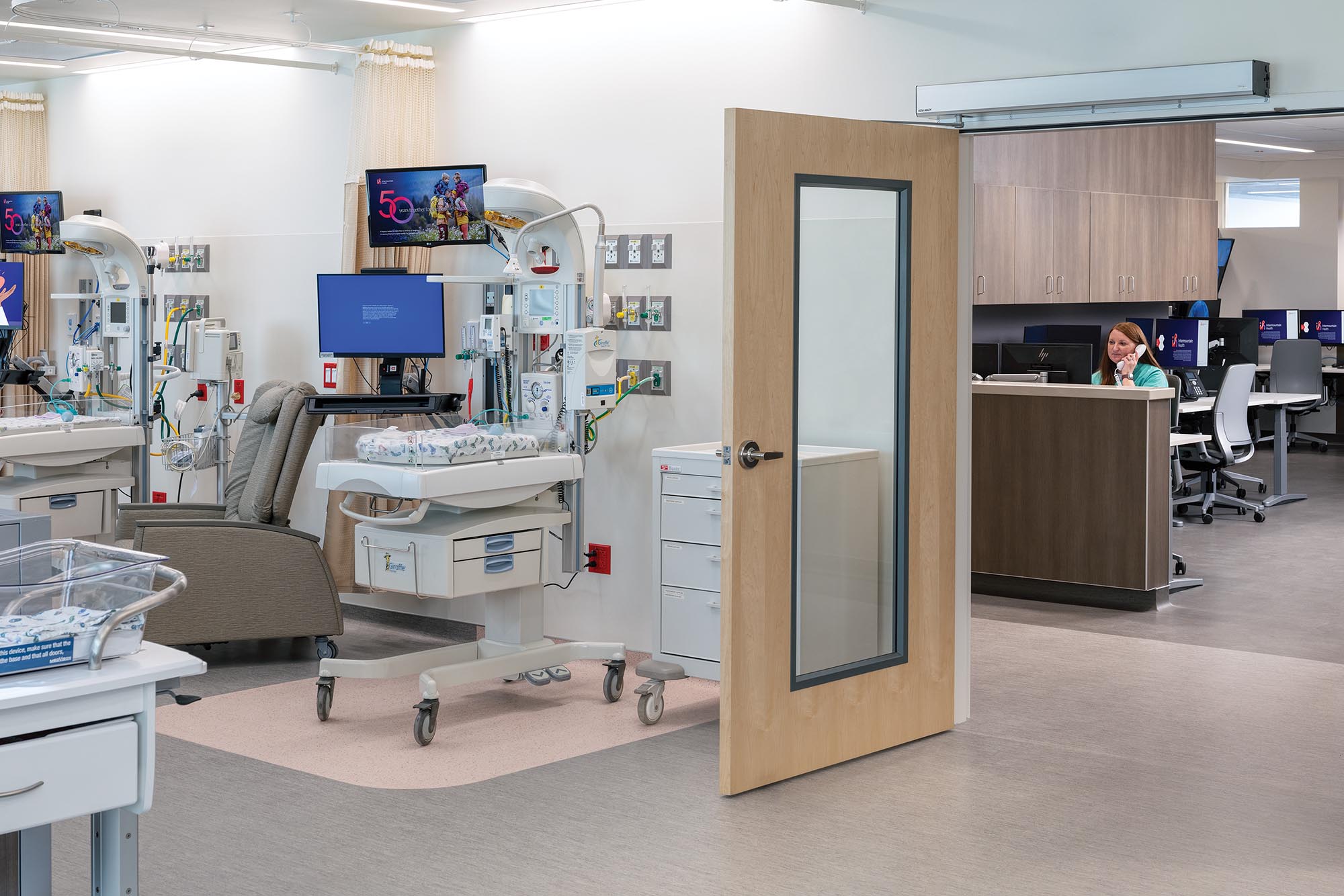
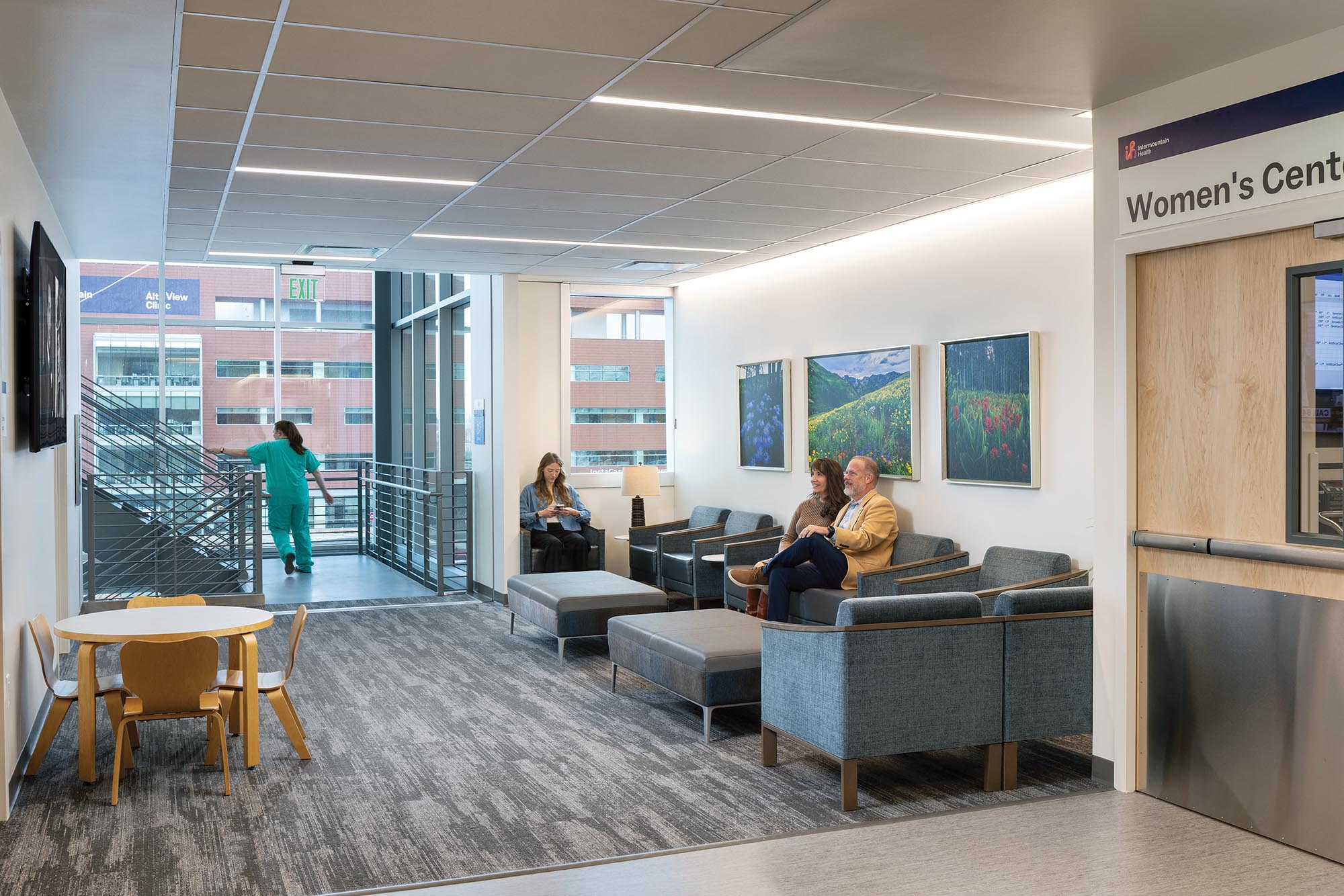
The Women’s Services renovation project involved relocating an existing department with multiple physical and regulatory challenges into a new 29,000 sf unit. This was the first of a multi-phase, 85,000 sf remodel across three buildings at Intermountain Health’s Alta View Hospital campus. The new unit consists of 19 patient beds, including three post-partum and 16 LDRP patient rooms, two of which accommodate birthing tubs. This entailed developing a new LDRP standard room to accommodate labor, delivery, recovery, and postpartum processes and equipment in a patient-centered environment. The design also includes a cesarean two-operating room suite with interstitial infant resuscitation, accessible via the OR’s sterile corridor and a non-sterile path for air med and ambulance patient transport. Additional unit components include a nursery and both central and decentralized nurse stations. Patient support spaces included lactation rooms, infant hearing, respiratory therapy, and lab services. The spaces to support staff included team huddles, a breakroom, a staff lactation room, and on-unit provider sleep rooms and showers.
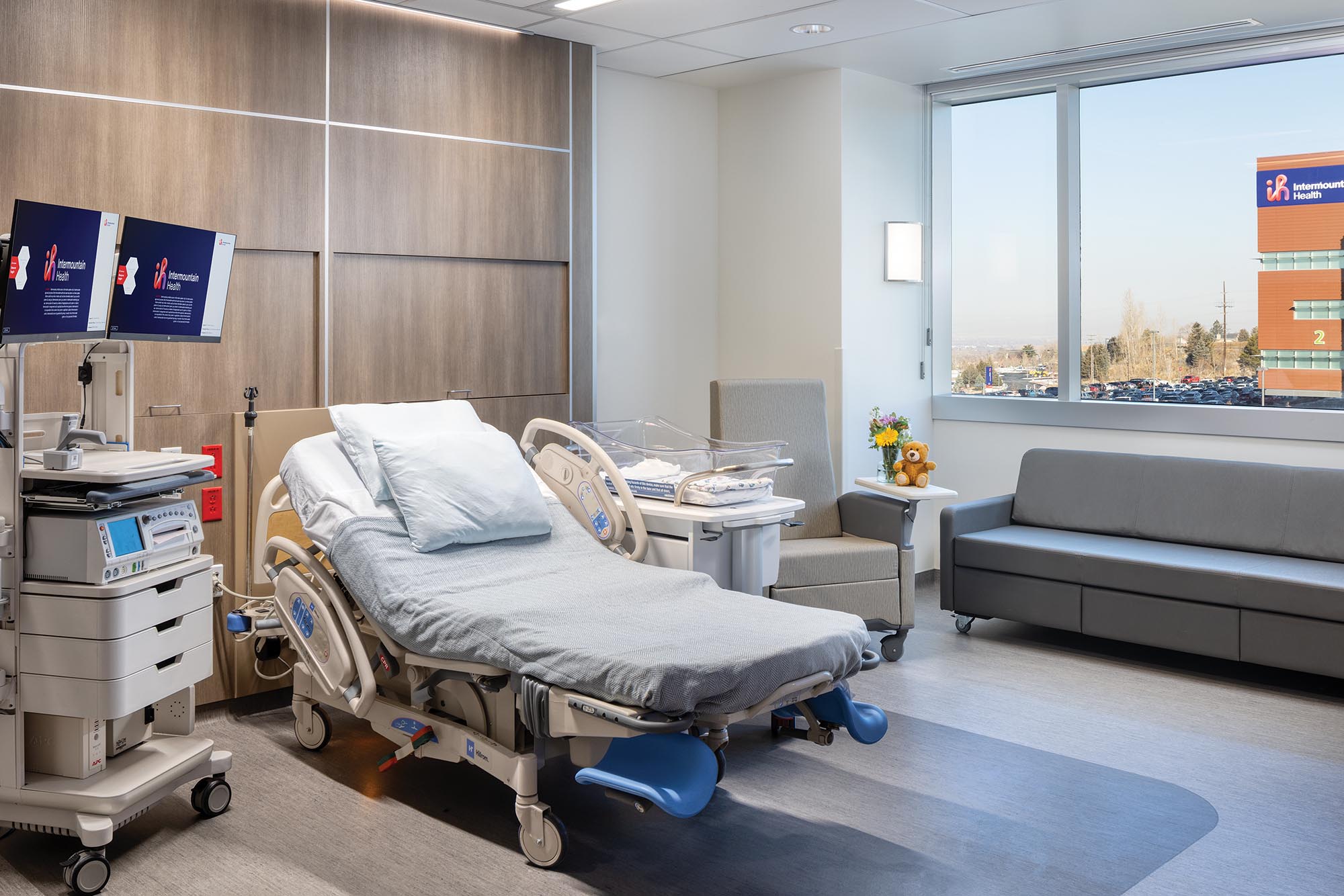
LDRP Room Standard
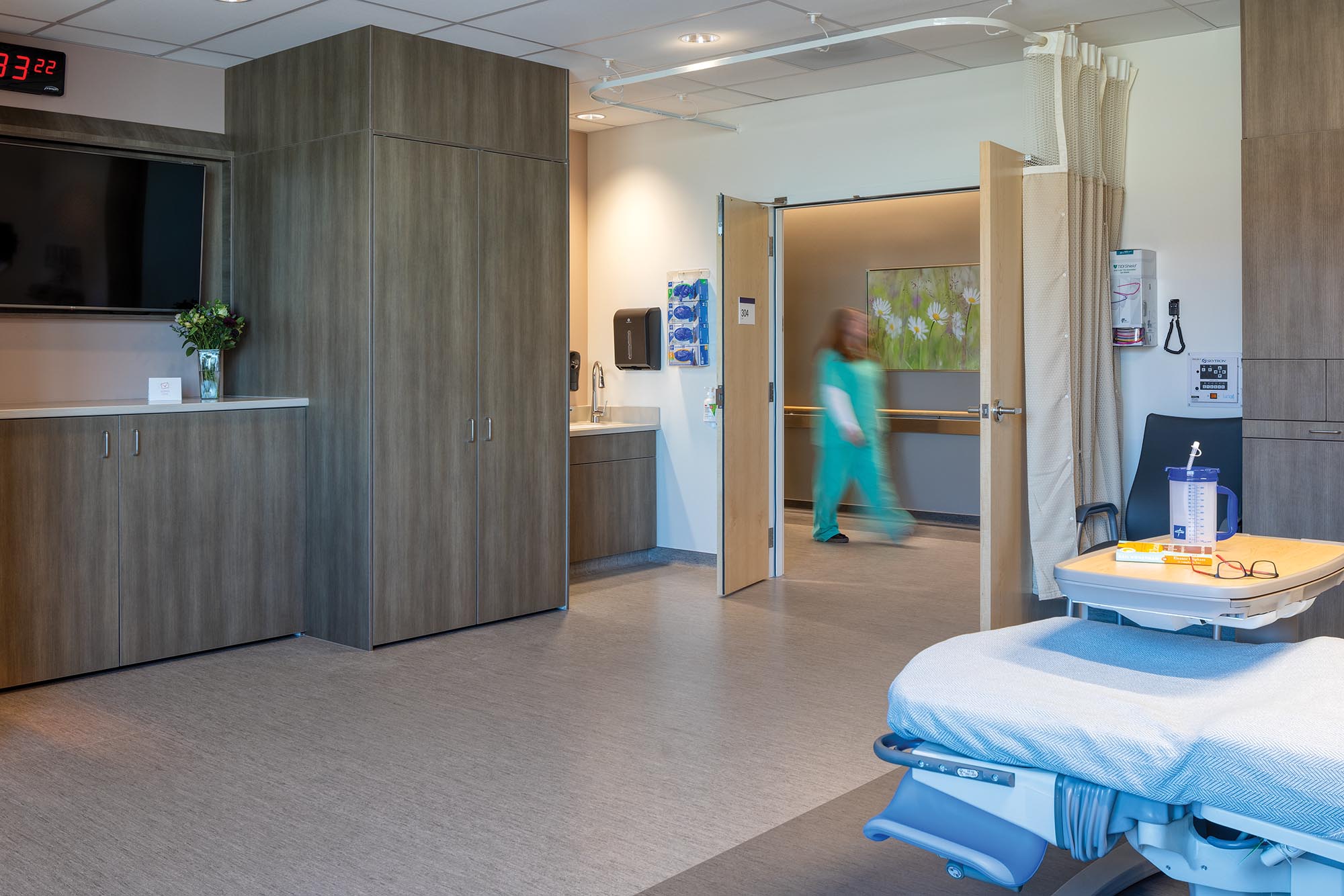
The new Labor, Delivery, Recovery, and Postpartum (LDRP) unit design is equipped with both labor and postpartum equipment, materials, and supplies, so the patient can stay in one room for the full extent of their stay and focus on bonding with their new arrival.
Reducing Patient Anxiety
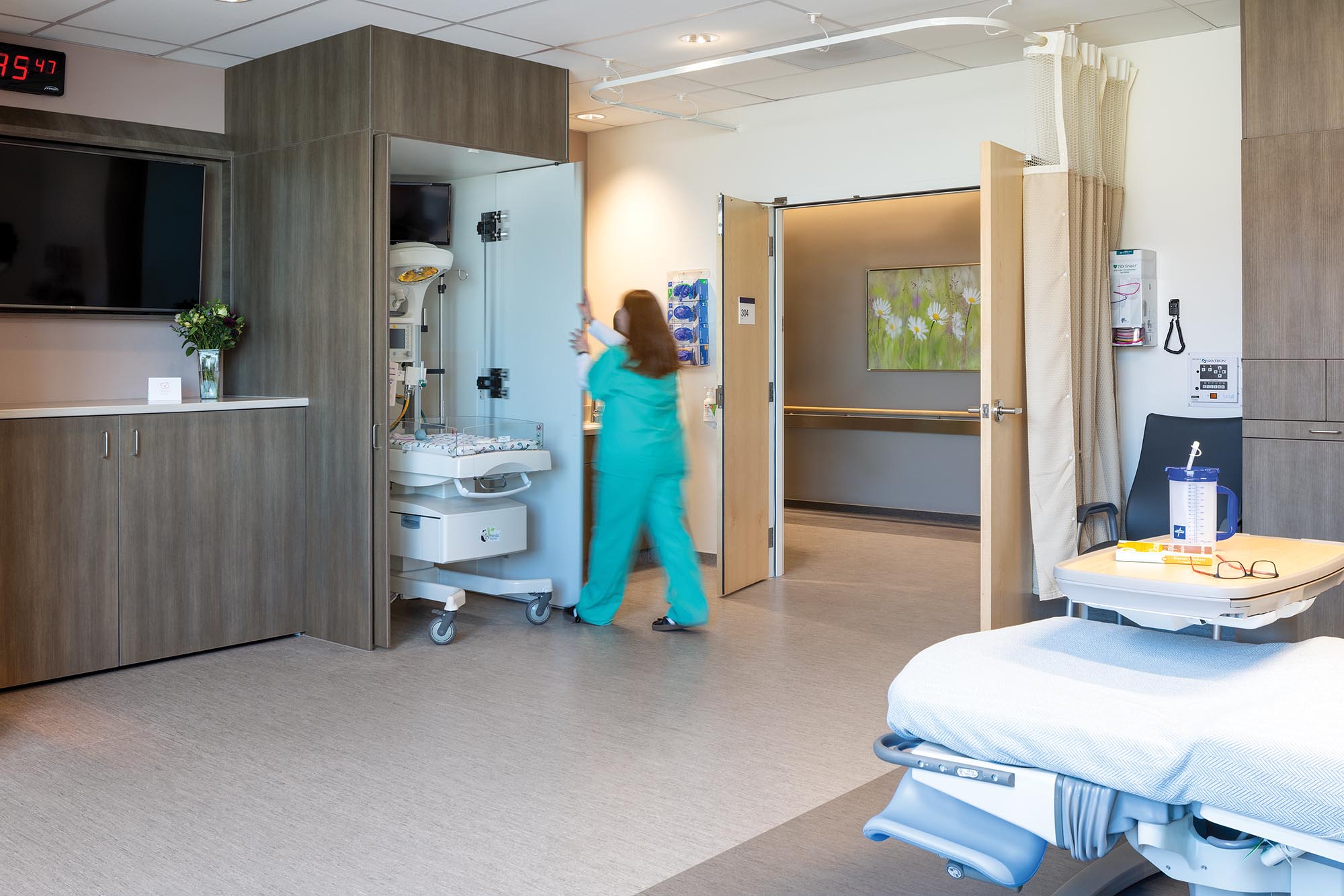
Extensive design and mock-up sessions were held with user groups to review design elements for the LDRP room at various stages of use. Cabinetry and millwork allowed the infant resuscitation or med gas equipment to be accessible during labor and delivery, and put away when not in use. These design features provided a comfortable atmosphere that reduced the patient’s anxiety while simultaneously giving supporting staff quick access, increasing the time spent with the patient.
Restorative Design
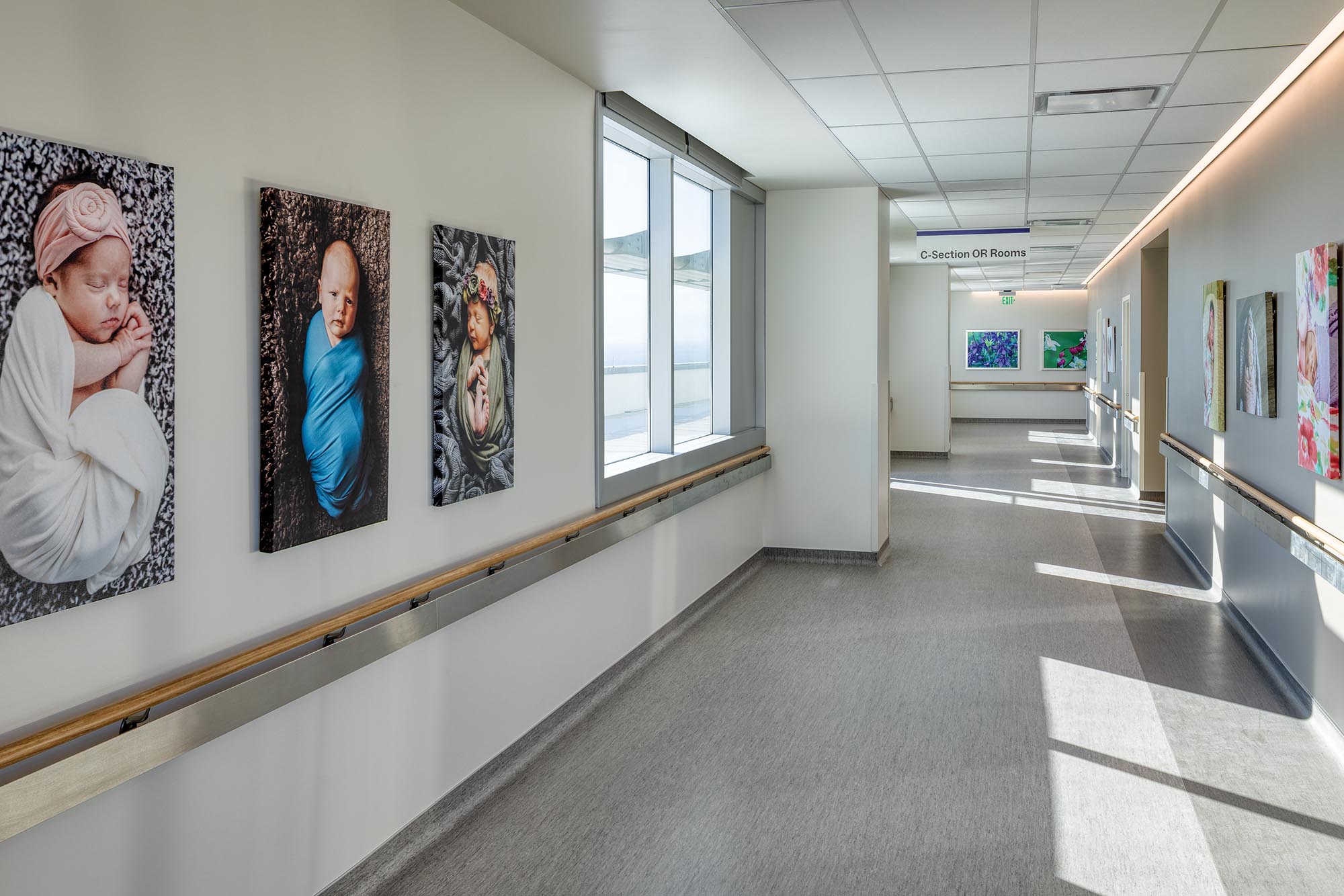
The aesthetic for the Women’s Services unit prioritized a neutral, restorative environment designed to welcome new life and support families during a tender transition. While adhering to system standard materials, the design team collaborated with stakeholders to develop specialized room types that balance longevity with comfort.
Infant Resuscitation Room
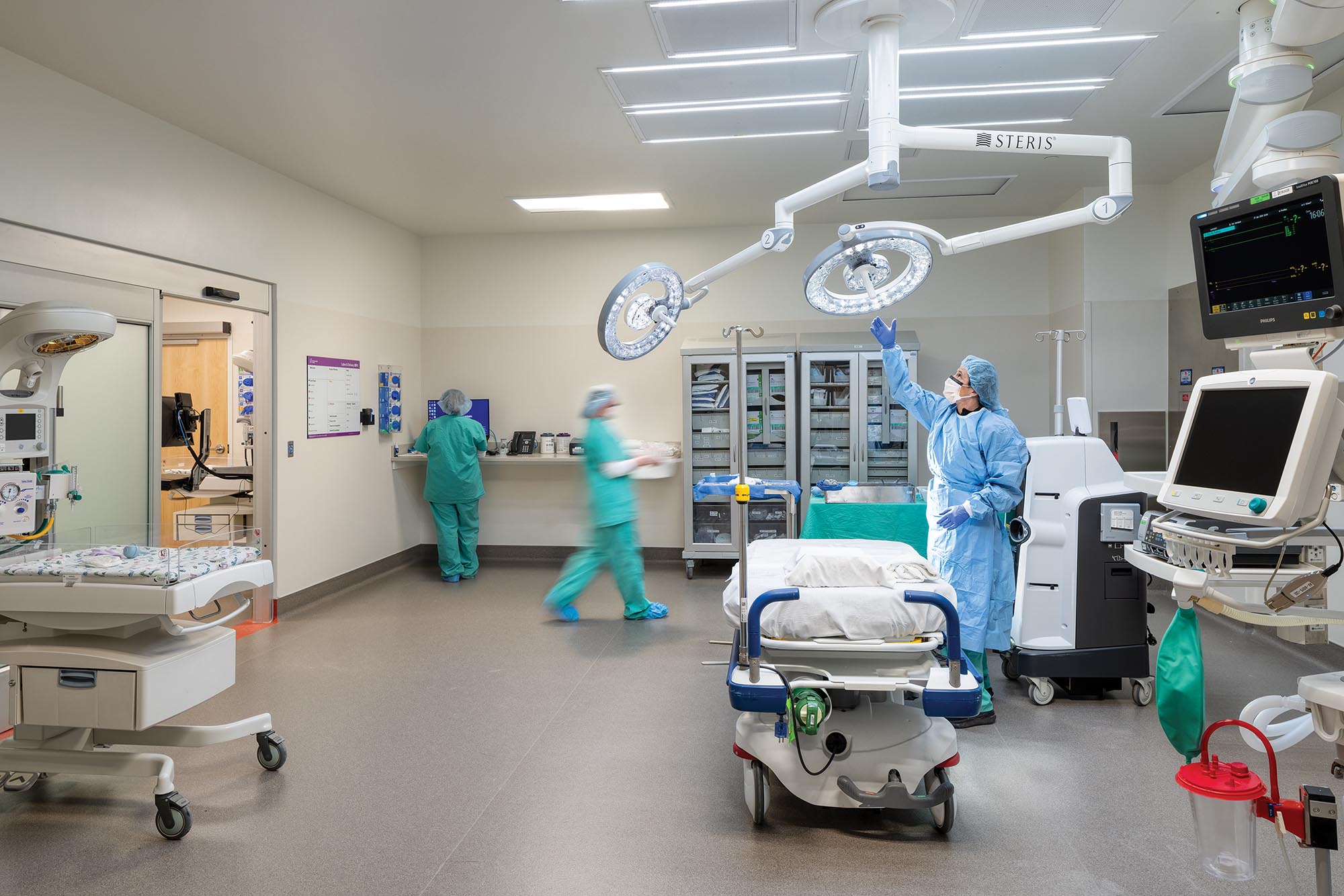
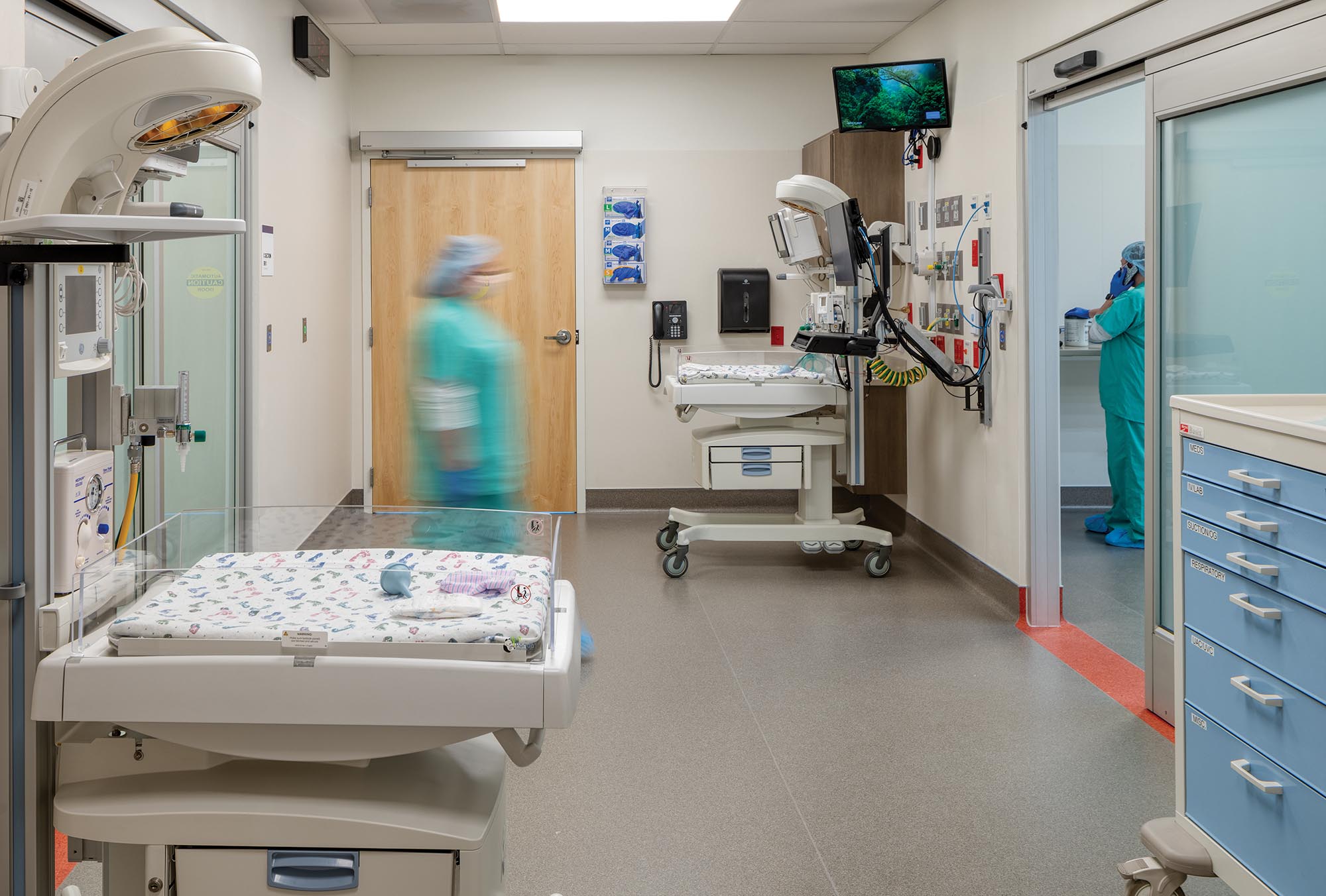
Time is crucial in the delivery of a baby; the two-OR cesarean suite was designed with an infant resuscitation room between the operating rooms. The centrally located resuscitation space allowed quick movement of a baby to this area where additional support staff could be present without crossing the restricted red line. This also allows for EMTs and heliport transport to retrieve the baby more quickly after delivery, if the baby needs to be moved to another facility. The pathway to this Infant Resuscitation Room and access to the room were new ideas in efforts to elevate the patient care process.
Clearly Designated Spaces
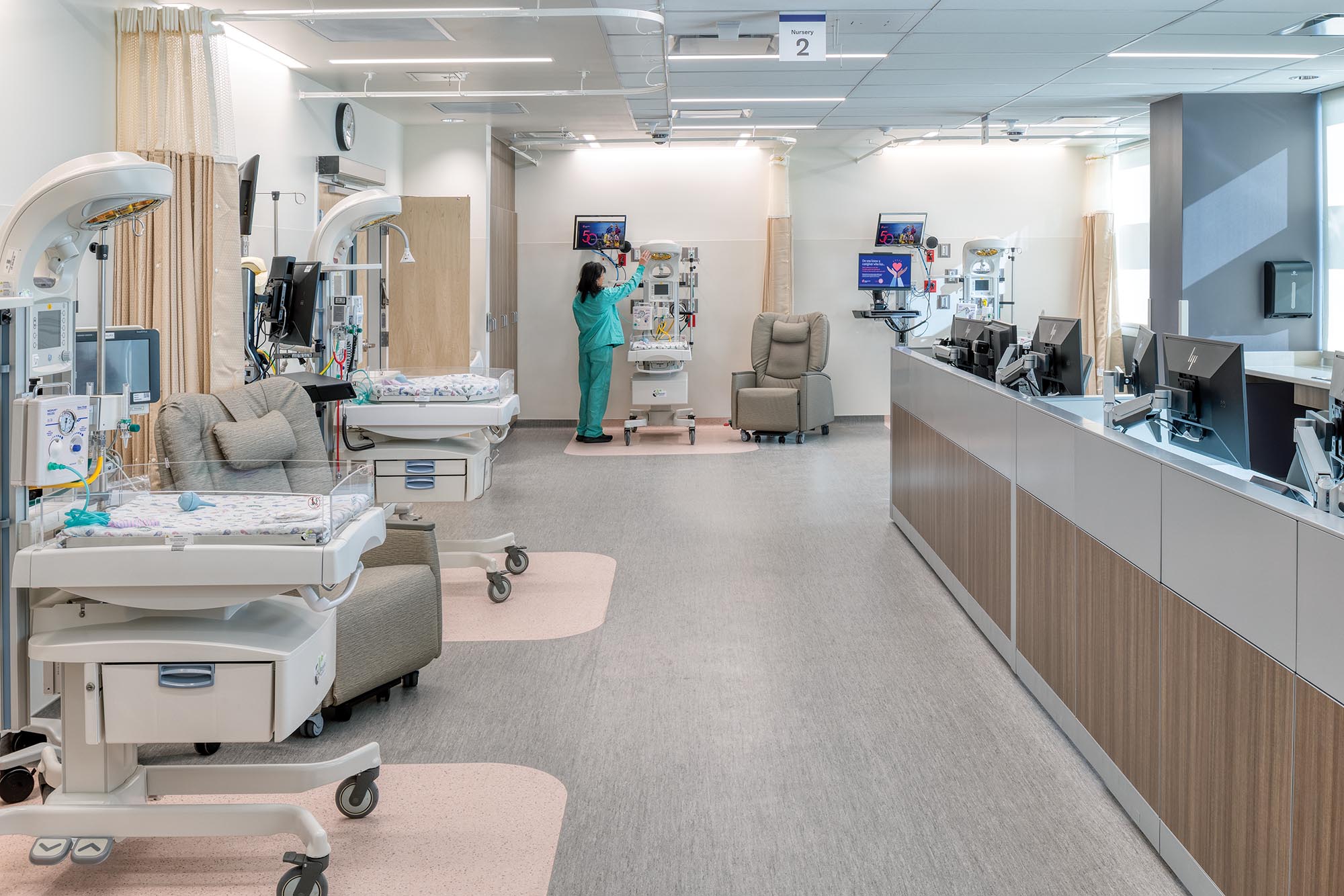
A soft pink was maintained in the Nursery to create a warm, “sweet spot” for newborns. Functionality is integrated through thoughtful wayfinding, utilizing art, landmarks, and painted alcoves to assist navigation. Additionally, simple yet effective flooring patterns clearly designate spaces and guide movement, ensuring an intuitive experience for both patients and staff.
Centralized Nurse Station
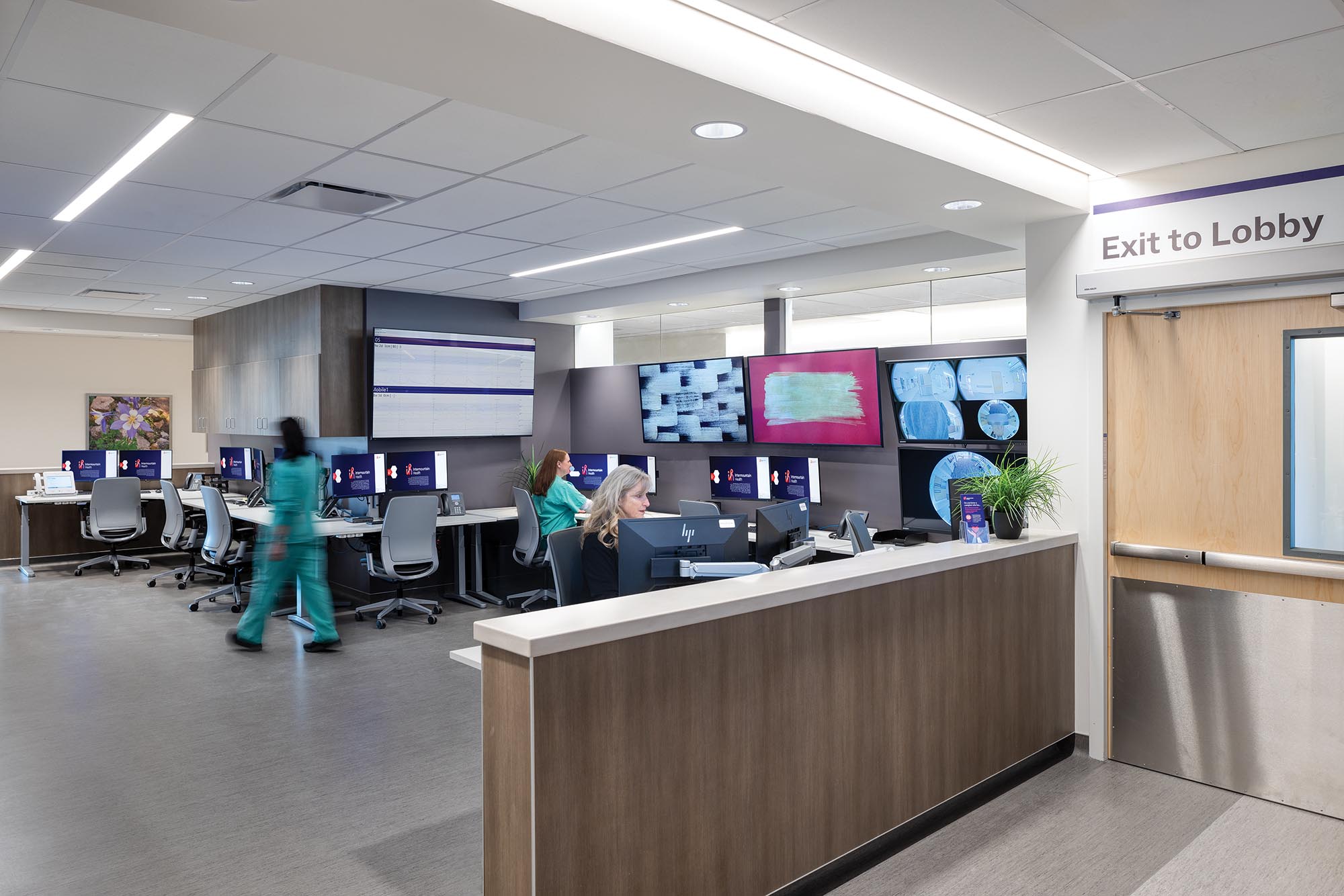
The centralized nurse station provides greater opportunities to foster staff collaboration and caring relationships with patients, thereby increasing the continuity of care between providers/staff and patients from labor to postpartum.