

FFKR’s Living Environment Studio’s mission is to design housing that is safe, functional, and welcoming for every resident, today and well into the future. In multifamily housing, accessibility is not simply a matter of code compliance. It is about foresight, dignity, and creating environments that can adapt as residents’ needs change over time.
One of the most common areas of discussion with clients and contractors involves grab bar requirements in R-2 occupancies, particularly the differences between Type A and Type B dwelling units. Grab bars are a small but critical element of accessible design, and misunderstandings about when they are required, where backing must be provided, and how they affect cost and aesthetics can lead to confusion during design and construction.
This article is intended to clarify those distinctions, explain the intent behind the requirements, and highlight how thoughtful design coordination can reduce risk while improving long-term usability.
Accessibility as a Design Strategy, Not a Constraint
Accessibility standards exist to ensure that housing remains usable for people with a wide range of physical abilities. In multifamily projects, this means planning for residents who may use wheelchairs, walkers, or other mobility aids, not only at move-in, but for years to come.
Rather than viewing accessibility requirements as restrictive, we approach them as a design strategy. When properly integrated early in the design process, accessibility features can be incorporated seamlessly, without sacrificing aesthetics, efficiency, or market appeal.
Grab bars are a perfect example of this philosophy.
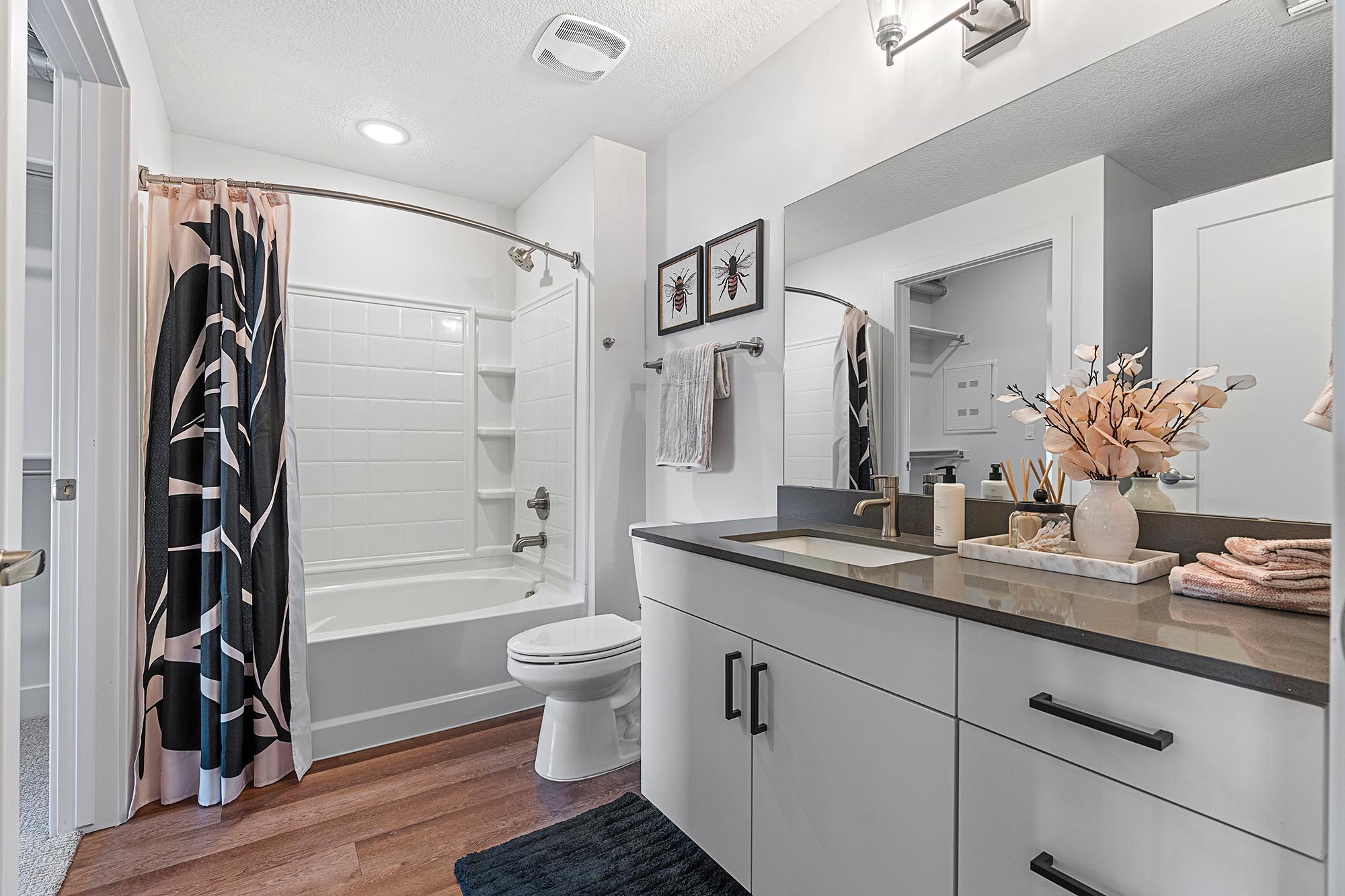
For residents, these requirements mean that their home can evolve with them. A unit that can be quickly and safely adapted supports independence and reduces the risk of injury, particularly in bathrooms, where falls are most common.
Type A Units: Designed for Accessibility and Adaptability
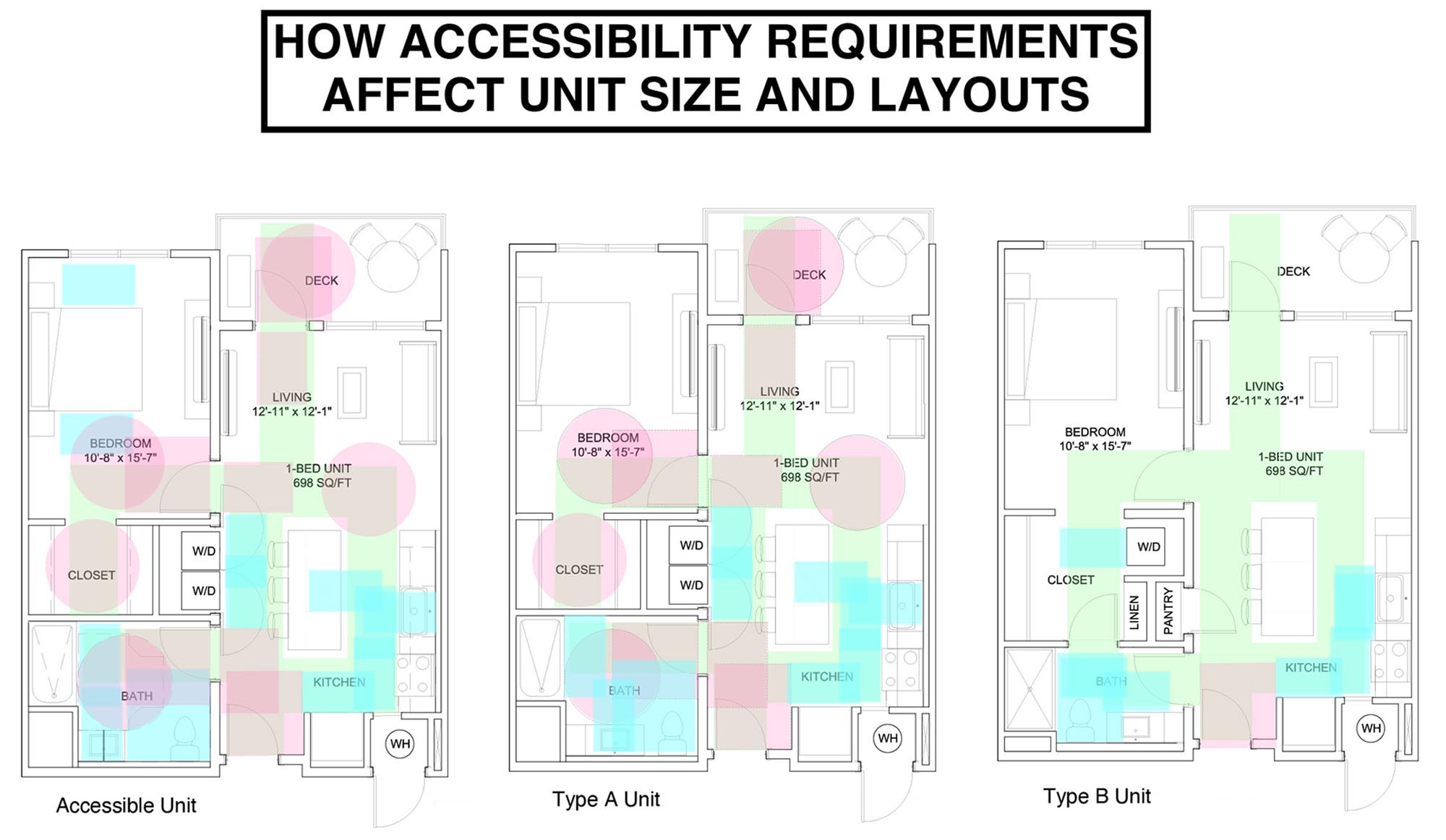
Type A dwelling units are intended to provide a high level of accessibility at the time of occupancy. These units are designed so that a resident using a wheelchair can enter, maneuver, and use all primary spaces independently.
Key Characteristics of Type A Units
- Larger clear floor spaces and turning radii
- Wider doorways and accessible routes
- Bathrooms and kitchens designed for wheelchair maneuverability
- Controls, hardware, and fixtures are placed within accessible reach ranges
These requirements affect the unit’s overall planning, particularly in bathrooms and kitchens, where space constraints are often most challenging.
Grab Bars in Type A Units
A common misconception is that Type A units must include grab bars installed at construction. They do not.
Instead, Type A units are required to include reinforced backing at specific locations around:
- Toilets
- Bathtubs
- Showers
This reinforcement allows grab bars to be installed later, quickly and securely, without opening walls or performing invasive renovations. The intent is flexibility: residents who do not need grab bars at move-in are not forced to live with institutional features, while those who do need them can have them installed easily when required.
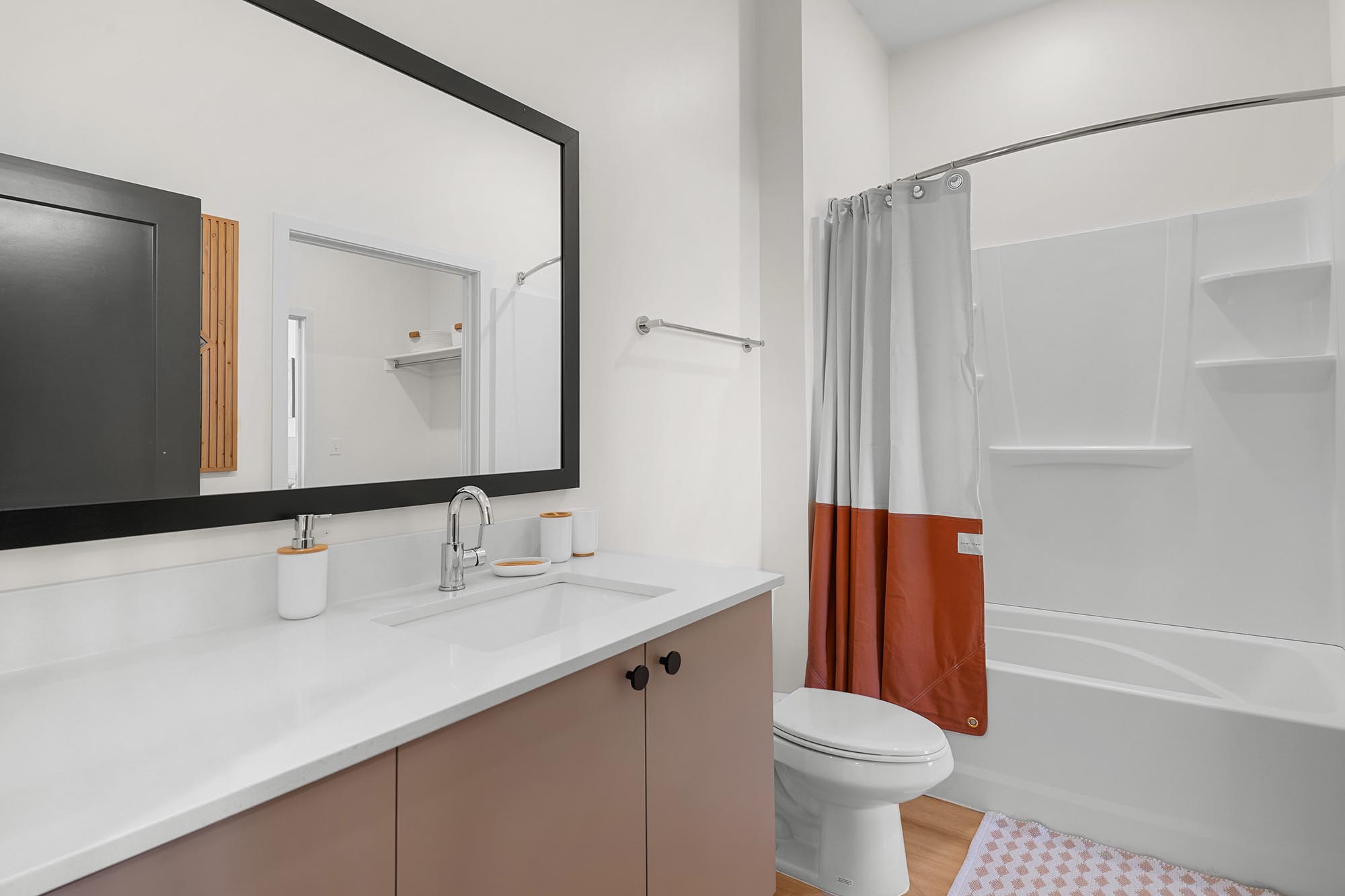
MAINTAINING A RESIDENTIAL FEEL
This same logic applies elsewhere in Type A units. For example:
- Kitchen and bathroom sinks may include base cabinetry, provided it can be removed in the future
- Clearances are planned so that forward or parallel approaches can be achieved when needed
The result is a unit that feels residential and market-appropriate, while still meeting the highest accessibility standards.
Type B Units: Prepared for Future Adaptation
Type B units typically make up the majority of dwelling units in a multifamily project. These units are considered adaptable, meaning they are not fully accessible at move-in but can be modified in the future to accommodate a resident’s needs.
Key Characteristics of Type B Units
- Basic accessible routes within the unit
- Reach-range compliant controls and outlets
- Bathrooms sized for adaptability rather than full wheelchair maneuvering
While Type B units do not require the same level of clearance as Type A units, they still play a critical role in meeting federal accessibility requirements.
Grab Bars in Type B Units
As with Type A units, grab bars are not installed at construction in Type B units. However, reinforced backing is still required at designated locations in bathrooms. This ensures that grab bars can be added later without structural modifications.
The primary difference lies in maneuvering space. A Type B bathroom may not provide the same turning clearances as a Type A bathroom. However, it can still be modified to improve safety and usability for residents who need additional support.
Why the Distinction Matters
Understanding the difference between Type A and Type B units is critical for several reasons.
Code Compliance and Risk Management
Clear differentiation helps ensure compliance with:
- Federal accessibility requirements
- Building and accessibility codes
- Fair housing obligations
Misinterpreting grab bar requirements can lead to:
- Costly change orders
- Failed inspections
- Exposure to complaints or legal challenges
Proper documentation and coordination during design significantly reduce these risks.
Cost Control and Constructability
From a construction standpoint, installing blocking during framing is less expensive than retrofitting later. When reinforcement locations are clearly documented and coordinated with structural and plumbing systems, contractors can install them efficiently without disruption.
This proactive approach avoids:
- Opening finished walls
- Reworking waterproofing assemblies
- Displacing residents during renovations
Resident Safety and Dignity
For residents, these requirements mean that their home can evolve with them. A unit that can be quickly and safely adapted supports independence and reduces the risk of injury, particularly in bathrooms, where falls are most common.
The FFKR Approach: Precision, Coordination, and Experience
At FFKR, accessibility is never treated as an afterthought. Our Living Environment Studio integrates accessibility planning from the earliest design phases. Our team:
- Clearly document reinforcement locations in drawings
- Coordinate backing with plumbing, structure, and wall assemblies
- Verify clearances, reach ranges, and installation tolerances
- Work closely with contractors to avoid field conflicts
Our experience across a wide range of multifamily project types allows us to anticipate common issues before they arise, saving time and cost during construction while delivering better outcomes for residents.
Designing for Today and Tomorrow
Accessibility is ultimately about designing housing that supports people throughout all stages of life. By understanding the intent behind Type A and Type B requirements, and by implementing them thoughtfully, developers and contractors can deliver projects that are compliant, cost-effective, and human-centered.
At FFKR, we believe good design balances empathy with expertise. Through careful planning, clear documentation, and collaborative execution, we help create multifamily communities that promote safety, independence, and dignity today and for years to come.

Preston is a Principal Architect and a leader of our Living Environments Studio. He is based in our Salt Lake City office.
Interested in learning more? Email livingenvironmentsstudio@ffkr.com